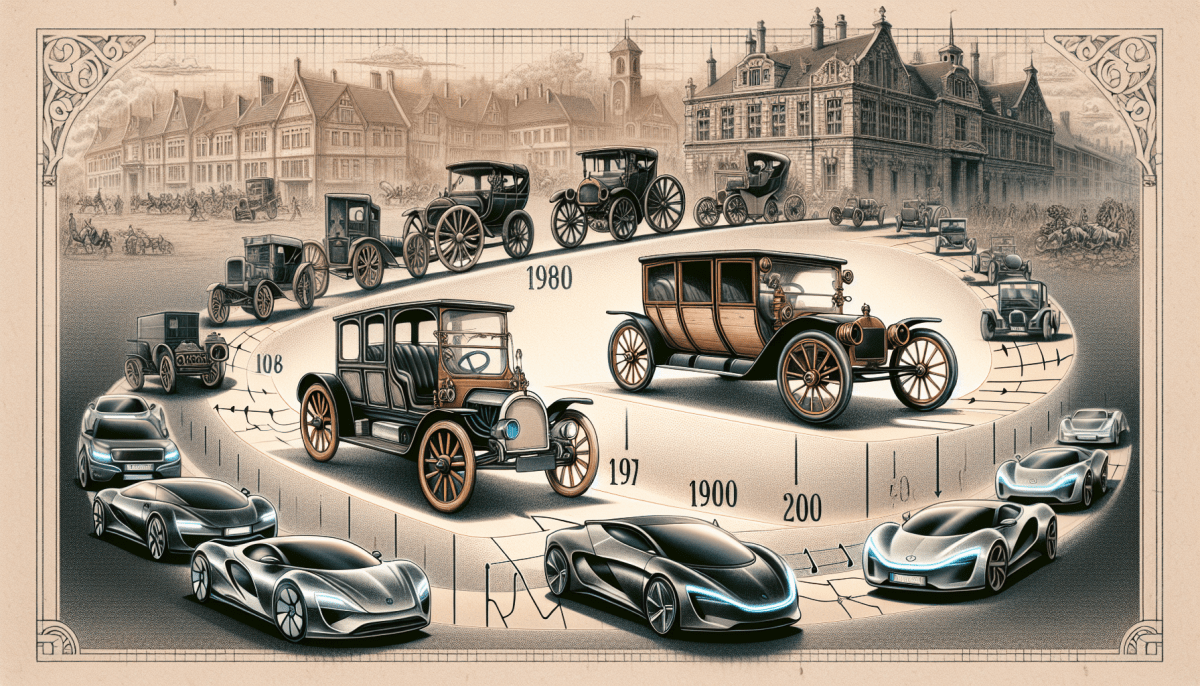
Despite being groundbreaking, early electric cars didn’t have the best performance. They were often slower than their gas-powered counterparts, but they had a certain charm. Imagine a quiet drive with no rumbling engines or exhaust fumes! By the late 1800s, electric vehicles were gaining popularity, particularly in cities where the noise and smell of gas engines were less welcome.
As the 20th century rolled in, electric cars faced stiff competition from gasoline vehicles, which were becoming faster and more convenient. Innovations in internal combustion engines and the establishment of gas stations made it easier for drivers to choose fuel over electric. But electric cars were not completely out of the picture; some early models were even used as taxis!
Moving into the 1930s, electric vehicles saw a decline, primarily due to the Great Depression. However, during this time, many people still appreciated their benefits, especially in urban areas. It wasn’t until the late 20th century that electric vehicles started gaining traction again, driven by a growing awareness of pollution and the search for sustainable alternatives. This early era laid the groundwork for the electric vehicles we cherish today, setting the stage for exciting innovations in automotive technology.
Key Milestones in EV Development
Electric vehicles (EVs) have come a long way since their humble beginnings in the 19th century. It all started in the 1830s when inventors like Robert Anderson created some of the first crude electric carriages. Fast forward to the late 1800s, and the first practical electric vehicle was developed by Thomas Parker in the UK, who built a battery-powered carriage that could actually drive on the roads.
One of the significant milestones came in the early 1900s when electric cars peaked in popularity. They were clean, quiet, and easy to operate, attracting many urban dwellers. However, as gasoline-powered cars became more affordable and accessible, EVs took a backseat and almost disappeared from the roads for several decades.
The revival of interest in electric vehicles truly began in the late 20th century. The 1990s saw the introduction of the first modern electric vehicles, like the Toyota RAV4 EV and the GM EV1. This was a crucial moment, as it reignited public interest and started the conversation about renewable energy and sustainability in transportation.
Fast forward to the 21st century, and we’ve seen some groundbreaking developments. The launch of the Tesla Roadster in 2008 changed the game, proving that EVs could be fast, stylish, and desirable. With this shift, more automakers jumped on the electric bandwagon, introducing a variety of models that catered to different tastes and needs.
Today, we are witnessing an exciting surge in EV adoption, spurred by advancements in battery technology, government incentives, and a growing awareness of climate change. The evolution of electric vehicles is not just a story of innovation; it’s a reflection of our changing world and the move towards a more sustainable future.
Modern Innovations Shaping Electric Vehicles
Electric vehicles (EVs) are on a roll, and it’s not just about them being eco-friendly anymore. Modern innovations are playing a huge role in making EVs smarter, faster, and more efficient than ever. One of the coolest advancements is battery technology. Today’s batteries are not just smaller, but they also pack a punch with higher capacity, meaning you can drive longer distances without worrying about finding a charging station.
Another exciting development is the rise of regenerative braking systems. This nifty tech captures energy that would normally be lost during braking and sends it back to the battery. So not only do you get to stop safely, but you also get a little boost in range. Who wouldn't want that? It’s like giving your car a tiny bit of extra power every time you slow down.
We can't talk about modern EVs without mentioning the latest in autonomous driving features. Many electric cars now come equipped with semi-autonomous driving capabilities. These systems can help with steering, lane changes, and even parking, making your commute a whole lot easier. It’s almost like having a co-pilot along for the ride, taking some of the stress out of driving.
And let’s not forget about connectivity. With innovations like smartphone integration and over-the-air software updates, your EV is more than just a car. It’s a smart device on wheels! You can check charging status, locate stations, and even control some features right from your phone. This seamless integration keeps you in the loop and enhances your overall driving experience.
Future Trends in Electric Mobility
The world of electric mobility is rapidly evolving, and it’s exciting to see what’s on the horizon. As technology advances, we can expect even smarter and more efficient electric vehicles (EVs) to hit the roads. Innovations in battery technology are leading the way. Companies are working on batteries that charge faster and last longer. Imagine being able to charge your car in just a few minutes at an ultra-fast charging station!
Another trend we’re likely to see is the rise of autonomous electric vehicles. Self-driving technology is already in development, and pairing it with electric power could transform urban transportation. Think about it: less traffic congestion, reduced emissions, and safer roads. This combination is not just a dream; some manufacturers are already testing these vehicles in real-world conditions.
Lastly, the expansion of charging infrastructure will be crucial. As more people switch to electric vehicles, having enough, easy-to-access charging stations will help ease any worries about range anxiety. It’s about making electric mobility practical for everyone, and that’s a trend that’s definitely on the rise!